
Kindroid Alternative: AI Companion Memory vs Story-First Character Roleplay
A source-backed Kindroid alternative guide comparing AI companion memory, paid context tiers, voice, selfies, many-character roleplay, character cards, personas, and OnlyKin's story-first workflow.
The best Kindroid alternative depends on whether you want one deeply customized AI companion or many story-ready characters. Kindroid is strongest for layered companion memory, backstory, key memories, journal entries, voice calls, selfies, internet-connected chat, and paid context tiers. OnlyKin fits better when you want public character discovery, structured cards, private drafts, reusable personas, saved sessions, transparent credits, and a story-first workflow across many characters instead of one companion-first relationship loop.
What is the best Kindroid alternative for roleplay?
The best Kindroid alternative for roleplay is the product that matches your story loop. Kindroid is strong when you want a deeply customized AI companion with layered memory, backstory, key memories, journal entries, voice, selfies, and internet-connected context. A story-first character chat app like OnlyKin is a better fit when you want many public characters, structured cards, private drafts, reusable personas, saved sessions, transparent credits, and less emphasis on maintaining one primary companion relationship.
Is Kindroid better than an AI character chat app?
Kindroid is better when the user's main job is building a personal AI companion with memory, voice, images, and ongoing relationship continuity. An AI character chat app is better when the user wants variety: many genres, many characters, public discovery, card creation, private drafts, persona switching, and repeatable story sessions. The choice is not memory versus no memory. It is companion-first memory versus story-first memory distributed across character card, persona, session history, summaries, and creator workflow.
Why do people look for Kindroid alternatives?
People look for Kindroid alternatives when they like memory-focused companions but want a different product shape. Some want a broader public character library, simpler first-session discovery, less setup around one companion, clearer roleplay card structure, different pricing, or a product that treats romance as one genre instead of the main frame. Others compare Kindroid with Nomi, Replika, Character.AI, Chub, SillyTavern-style tools, and newer character chat apps because memory, media, privacy, and creator control are packaged differently in each product.
What should a Kindroid alternative preserve?
A serious Kindroid alternative should preserve the reason users care about Kindroid in the first place: continuity. That means stable character identity, user persona, important relationship facts, saved sessions, and clear paid limits for memory or model quality. It does not need to copy every companion feature. OnlyKin's stronger path is to preserve continuity through structured character cards, private drafts, personas, sessions, source-backed memory education, and many-character discovery rather than rebuilding Kindroid's personal-companion interface.
Key takeaways
- Kindroid is a strong memory-first companion product, not merely a generic chatbot.
- Its official docs separate persistent memory, cascaded medium-term memory, retrievable long-term memory, and journal entries.
- Kindroid's subscription docs tie longer context, cascaded memory, flagship models, more companions, voice, video, selfies, and add-on memory tiers to paid plans.
- OnlyKin is story-first character chat: public discovery, structured cards, private drafts, personas, saved sessions, and transparent credits.
- A fair Kindroid alternative page should compare the user's job: one companion relationship, many character stories, media immersion, or creator workflow.
The short answer
Stay with Kindroid if what you want is one deeply customized companion that remembers your life. Its layered memory, voice calls, and selfies lead the companion lane, and its documentation is unusually honest about how memory actually works.
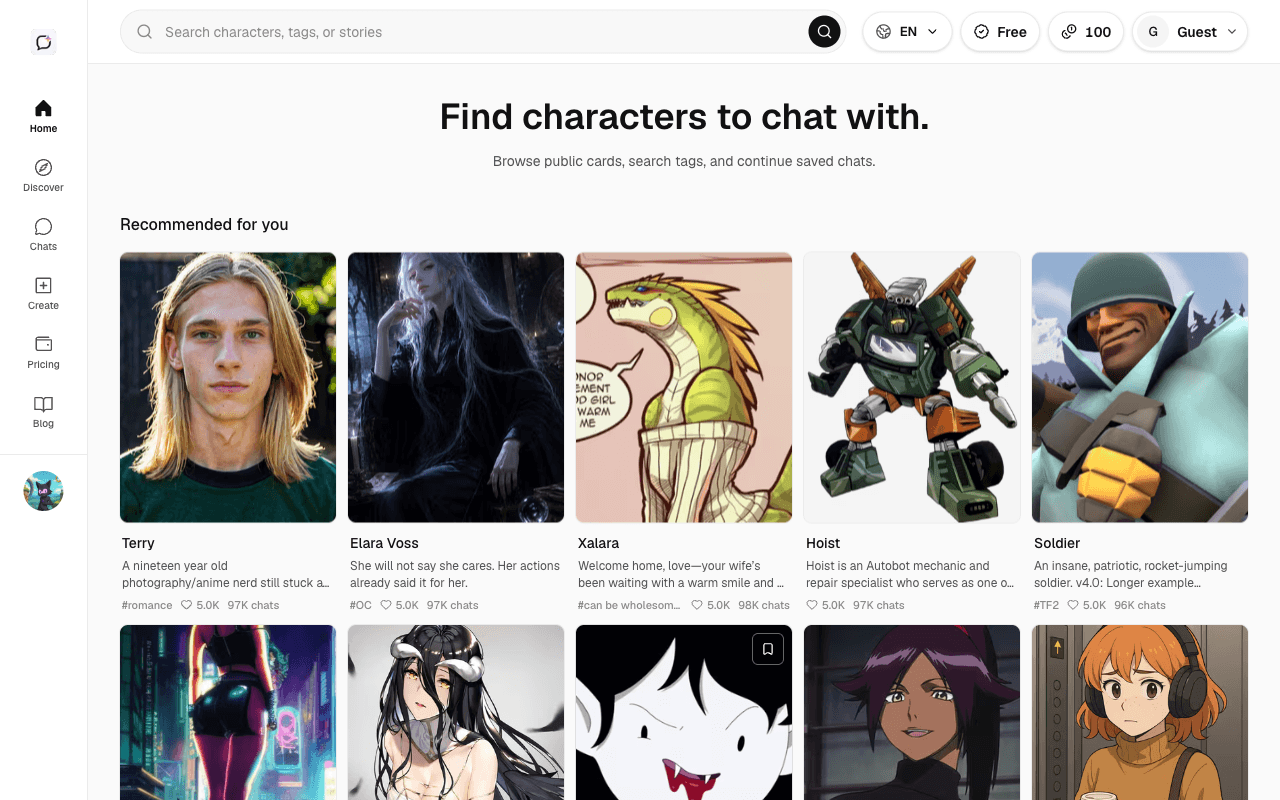
Switch to OnlyKin if what you actually do is roleplay: many characters, many genres, structured cards, and a public library you can browse before creating anything. The first messages need no account, so testing the difference costs about a minute.
| Kindroid | OnlyKin | |
|---|---|---|
| Built around | One customized AI companion | Many story-ready characters |
| Memory model | Layered: short-term, long-term, key memories, journal | Session history plus character cards and personas |
| Library | Private companions you build yourself | 4,800+ public cards with tags and search |
| Getting started | Account and setup first | Chat first — no sign-up for the first messages |
| Pricing shape | Subscription tiers unlock context, voice, selfies | Free daily credits; Pro for heavier use |
| Best for | Companionship and continuity | Roleplay variety and creator control |
What Kindroid genuinely does well
Kindroid's docs separate persistent short-term memory, cascaded medium-term memory, retrievable long-term memory, and journal entries — a real architecture, not a marketing word. Subscriptions then attach longer context, flagship models, more companions, voice, video, selfies, and add-on memory tiers to paid plans.
If a single companion with deep continuity is the product you want, the honest advice is to stay: nothing in the story-first lane replicates that journal-grade memory today.
Why people still look for an alternative
The common reasons are not complaints about memory. They are product-shape reasons: you want variety instead of one relationship, you want to browse other people's characters instead of building your own from scratch, you want roleplay structure — cards, scenarios, personas — instead of an open-ended companion, or you want a free tier that covers casual use without a subscription pitch.
That is a different job, and it deserves a different tool rather than a workaround.
What switching actually looks like
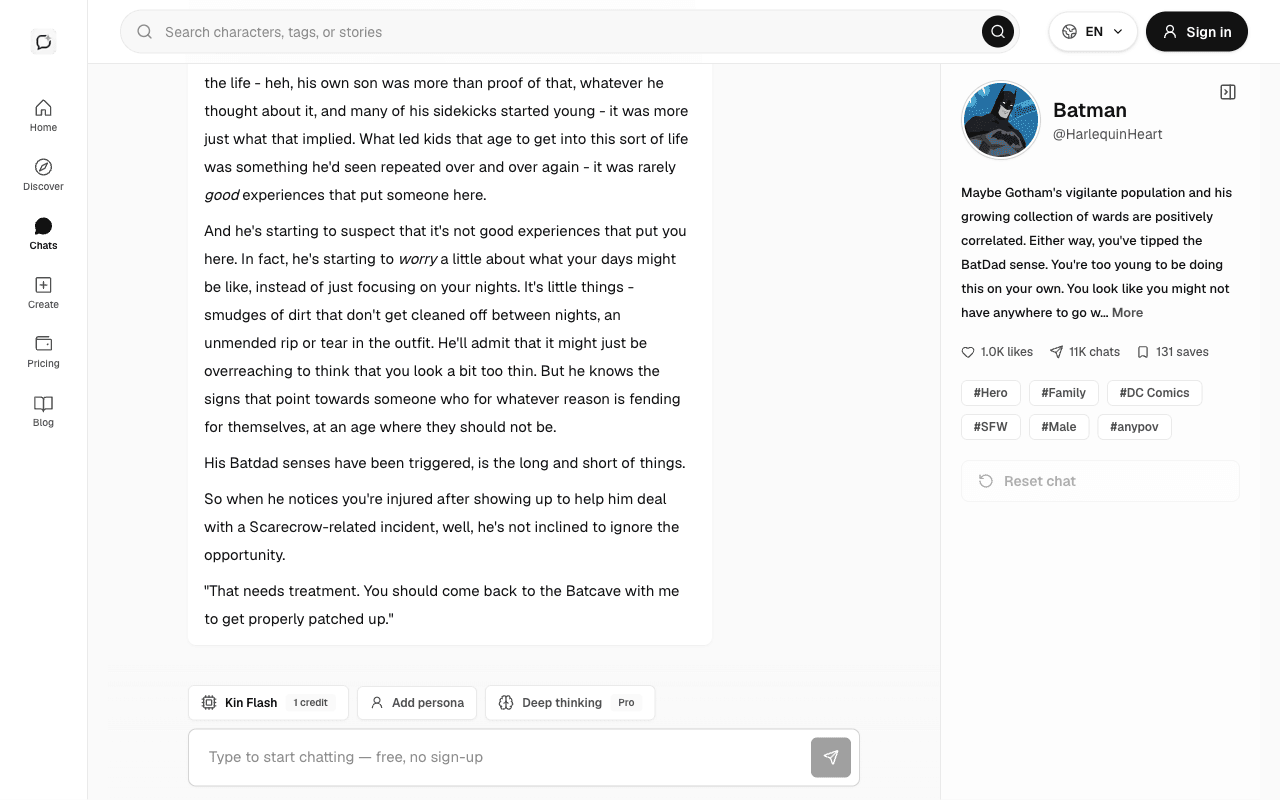
The OnlyKin loop: pick a card from the public library, read its opening scene, and type. Character cards keep the definition structured (description, scenario, opening message), personas carry your side of the story between characters, and private drafts let you build without publishing.
The first messages run without an account. A free account afterwards saves sessions and unlocks the daily credit allowance; Kin Pro raises the ceiling for heavy use. Credits are visible in the header, so the cost of a longer session is never a surprise.
Memory: the honest trade-off
Kindroid spends its complexity budget on remembering one relationship; OnlyKin spends it on switching stories without losing each one's thread. Sessions persist per character, and the card plus persona pin the facts that matter most — names, boundaries, tone — so a returning scene picks up cleanly.
Long context windows cost real money in any app, which is why every serious product meters them. The practical question is not which app advertises infinite memory, but which one keeps the facts you care about for the way you play.
A five-minute way to decide
Run the same short scene in both apps for ten to twenty turns. Watch three things: does the character keep its voice, does it recall names and promises from earlier turns, and what exactly does the paid tier change. Then pick the loop you would actually repeat tomorrow — that answer is more reliable than any ranking, including this one.
FAQ
Is OnlyKin a Kindroid replacement?
OnlyKin is not a one-to-one Kindroid replacement. Kindroid is stronger for users who want a personal AI companion with layered memory, voice, selfies, and companion customization. OnlyKin is a better fit for users who want many story-ready characters, public discovery, private drafts, personas, and saved roleplay sessions.
Who should stay with Kindroid?
Stay with Kindroid if your main goal is one or more deeply customized companions with backstory, key memories, journal entries, voice, images, internet-connected context, and paid memory tiers.
Who should try a Kindroid alternative like OnlyKin?
Try OnlyKin if your goal is less about one companion relationship and more about browsing characters, creating cards, importing or drafting privately, using personas, continuing story sessions, and publishing public characters.
Does OnlyKin have memory like Kindroid?
OnlyKin is best compared by roleplay continuity rather than by Kindroid's exact memory architecture. It uses structured cards, persona context, saved sessions, and premium longer-memory options; Kindroid publicly documents deeper companion-specific memory layers.
What should I test before switching from Kindroid?
Recreate one character and one scene, plant a name, a promise, a location, and a relationship fact, then return after a break. If the alternative preserves voice and continuity while making discovery and creation easier, it may fit your workflow better.