
Mufy AI Review: Is It Good, How Much Does It Cost, and What Are the Alternatives?
An honest look at Mufy AI after trying it: character quality, chat experience, pricing, and a few alternatives worth checking out.
Mufy AI is a plot-driven character roleplay chat app with a web client at chat.mufy.ai and an iOS app. Characters are user-created, so quality varies — the best ones have detailed setups and immersive openings, but plenty are half-baked. The creator tools are genuinely powerful (regex-based output shaping, formatting controls), though most casual users won't need them. Downsides: the web UI is basic, there's no Android app, and pricing isn't very transparent. If you're already in its community, keep going. If you want a browser-first experience where you can try characters without signing up, transparent per-message pricing, and an interface in 18 languages including Chinese, try OnlyKin.
Is Mufy AI good?
Mufy AI's experience depends on which characters you find. The best creators build detailed setups with immersive openings that carry a plot forward. But there are also plenty of low-effort characters that fall apart after two exchanges. If you like plot-driven long conversations rather than casual chat, Mufy's positioning fits. The web UI is basic, but the creator tools are genuinely deep.
How does Mufy AI compare to OnlyKin?
Mufy is best for users already in its creator community — the character library and advanced tools like regex-based output shaping are its strengths. OnlyKin is best for users who want to open a browser and start chatting: 4,800+ public characters are browsable without an account, the first messages don't require sign-up, the interface supports 18 languages including Chinese, and per-message credit costs are visible.
Principais conclusões
- Mufy focuses on plot-driven roleplay with user-created characters — quality varies a lot by creator.
- The web client is at chat.mufy.ai, there's an iOS app, but no Android.
- Creator tools are powerful (regex, formatting), though most casual users won't need them.
- Free to start, paid recharges for heavier use — pricing is not very transparent.
- If you want a browser-first alternative, OnlyKin lets you try characters without an account and shows per-message costs clearly.
Quick take
Mufy is a character roleplay chat app built around plot-driven AI conversations. The web client is at chat.mufy.ai, there's an iOS app, and all the characters are made by users. It has a loyal following in Chinese-speaking communities.
Overall impression: character quality depends on who made it — the good ones are genuinely good, the rest are forgettable. Chat holds up for longer storylines. The web UI is rough. If you're already enjoying it, no reason to switch. If you're new and curious, read on.
Characters and chat quality
Mufy's characters are all user-created, so quality is all over the place. Popular characters tend to have detailed setups and openings that pull you into a scene. But there are also plenty of low-effort ones — a few lines of description and the character goes off-script after two exchanges.
Where it shines is plot-driven long conversations. If you want back-and-forth storytelling rather than casual chitchat, Mufy's positioning fits.
The creator tools are surprisingly deep — the official docs at docs.mufy.ai cover regex-based output shaping, response formatting, and other features that serious character builders will appreciate. Casual users won't touch any of it.
Web and mobile experience
The web client at chat.mufy.ai works but the interface is basic — functional, not polished. The bare mufy.ai domain sometimes doesn't load; go to the chat subdomain directly.
There's no Android app, and the interface doesn't offer language options — it's essentially a Chinese-audience product.
Pricing
Free to start, paid recharges for heavier use. The pricing structure isn't very transparent — you need to dig into the app to see what things cost.
Third-party recharge resellers show up in search results. Stick to official channels.
Who it's for
Good fit: Chinese-speaking users who enjoy plot-driven roleplay, people already following creators in Mufy's community, character builders who want advanced formatting tools.
Not ideal: People who want to open a browser and start chatting without signing up, users who need a multilingual interface, anyone who cares about UI polish.
Side-by-side comparison
Short on time? This table covers the key differences.
| Mufy AI | OnlyKin | |
|---|---|---|
| Platform | chat.mufy.ai + iOS | Web-first, works on any device |
| Character library | User-created, quality varies | 4,800+ public cards with search and tags |
| Getting started | Account required | First messages need no account |
| Interface language | Chinese-focused | 18 languages incl. Chinese |
| Pricing | Free + recharges, not very transparent | Free daily credits, per-message cost visible |
| Creator tools | Regex, formatting — power-user level | Structured editor, easier to pick up |
Alternatives
If Mufy isn't quite right, or you just want to compare:
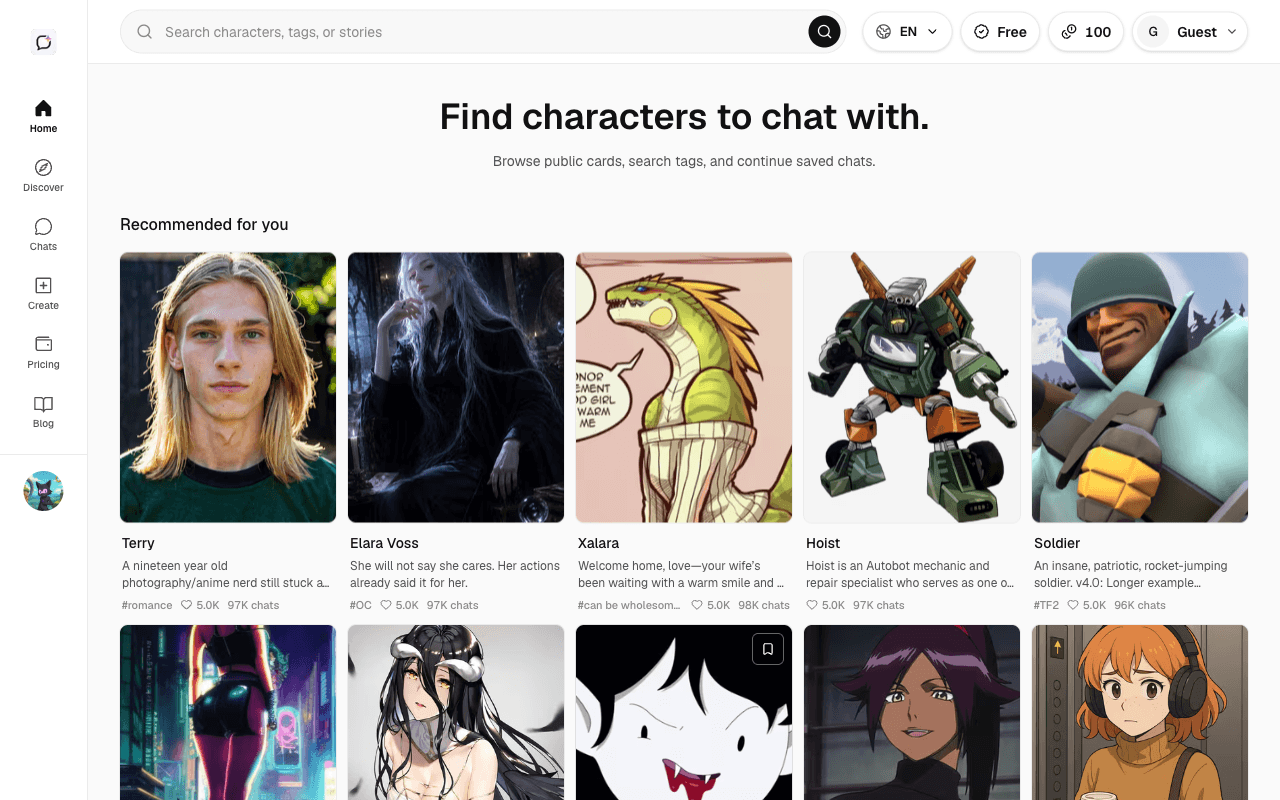
OnlyKin is web-first with 4,800+ public characters you can browse and try without an account. The interface supports 18 languages including Chinese, and every message shows its credit cost upfront.
Easiest way to decide: pick any character on OnlyKin and send two messages. Takes about a minute.
FAQ
What is Mufy AI?
Mufy AI is a character roleplay chat app focused on plot-driven AI conversations. Characters are created by users, and the platform provides advanced tools like regex-based output shaping. The web client is at chat.mufy.ai, with an iOS app available. Its user base is primarily Chinese-speaking.
Does Mufy AI have a web version?
Yes, at chat.mufy.ai. The bare mufy.ai domain sometimes doesn't load — use the chat subdomain directly.
Is Mufy AI free?
Basic features are free, but heavier use requires paid recharges. Pricing details are inside the app and not very transparent upfront. Third-party recharge resellers exist online — stick to official channels. OnlyKin's free tier works directly in the browser with visible per-message costs.
What are good Mufy AI alternatives?
For browser-based roleplay, OnlyKin is a solid option: 4,800+ public character cards, 18 interface languages including Chinese, and the first messages don't require an account. You can judge whether it fits in about a minute.
Can I move my Mufy characters to another app?
If you have the character's definition text, you can rebuild it in OnlyKin's editor — description, opening message, and scenario map over directly. Tavern-format cards can be imported in one step.